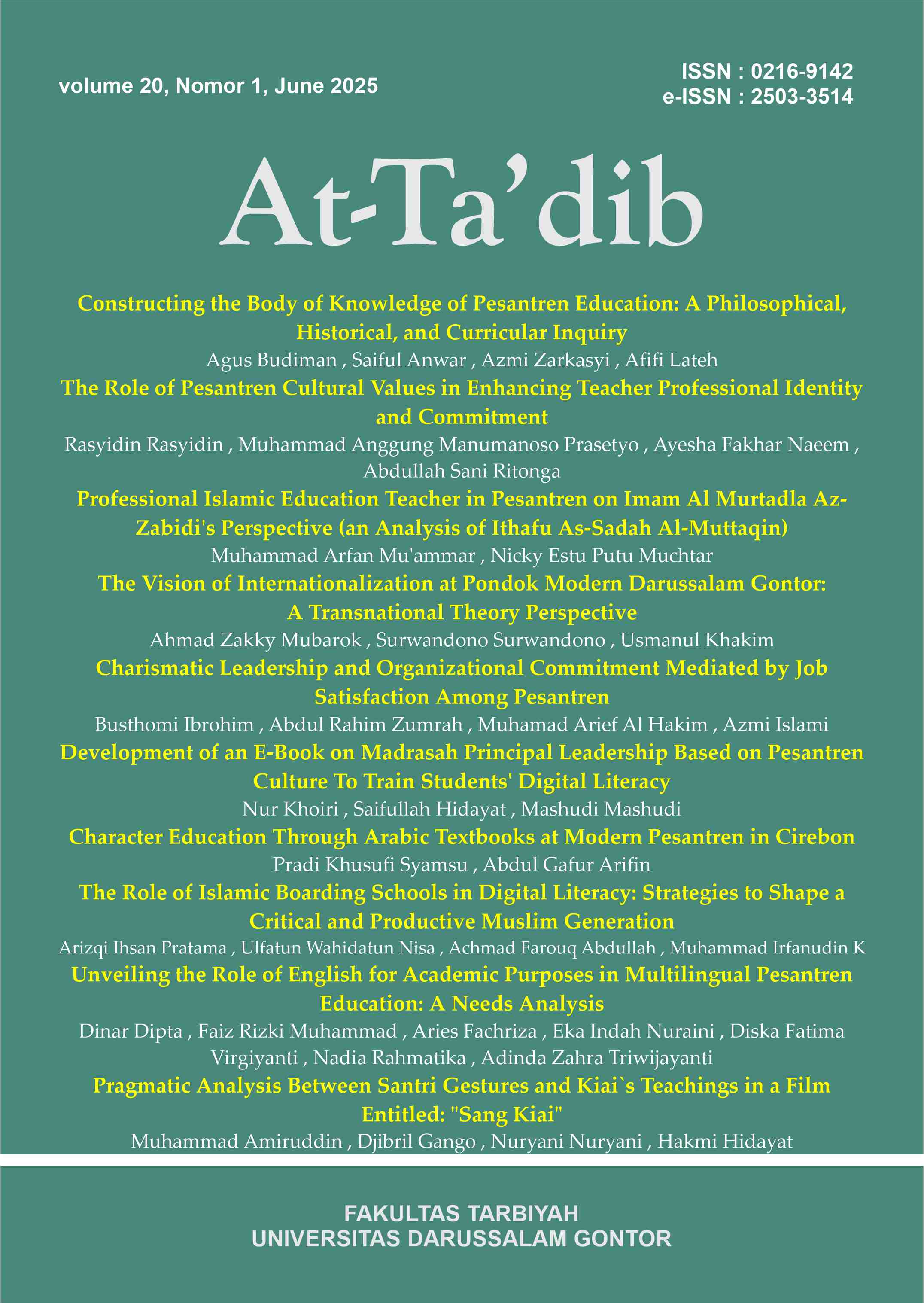
Pragmatic Analysis Between Santri Gestures and Kiai`s Teachings in a Film Entitled: "Sang Kiai"
DOI:
https://doi.org/10.21111/at-tadib.v20i1.35Kata Kunci:
Gestures, Santri, Pesantren, Kyai instructions, Pragmatics.Abstrak
Purpose -This study explores the intersection between pragmatics and non-verbal communication in Islamic educational contexts by analyzing santri gestures and their alignment with the teachings of the kiai as depicted in the Indonesian film Sang Kiai. The objective of this research is to identify types of gestures used by santri and interpret their meaning within the socio-religious framework of pesantren tradition. Methods - Using a qualitative descriptive method with a pragmatic-semiotic approach, the study analyzes selected scenes and gestures from the film and contextualizes them through ethnographic literature on pesantren culture and Islamic education. Findings – The findings reveal that santri gestures such as bowing, walking behind the kiai, avoiding direct eye contact, and sitting humbly are pragmatic expressions of submission, reverence, and learning ethics, deeply rooted in Islamic tradition and local pedagogical norms. These gestures function as non-verbal reinforcement of verbal teachings and play a crucial role in shaping the character of santri. Research implications / limitations -This research contributes to the underexplored area of non-verbal language in Islamic educational settings and suggests that gestures in pesantren are an embodied form of religious discipline and moral education. Originality -Still, the study offers a valuable lens for educators, linguists, and cultural researchers interested in the pragmatics of Islamic pedagogy and the role of body language in religious instruction.
Unduhan
Telah diserahkan
Diterbitkan
Cara Mengutip
Terbitan
Bagian
Lisensi
Hak Cipta (c) 2026 At-Ta'dib

Artikel ini berlisensiCreative Commons Attribution-NonCommercial-ShareAlike 4.0 International License.